
121.9K
Downloads
368
Episodes
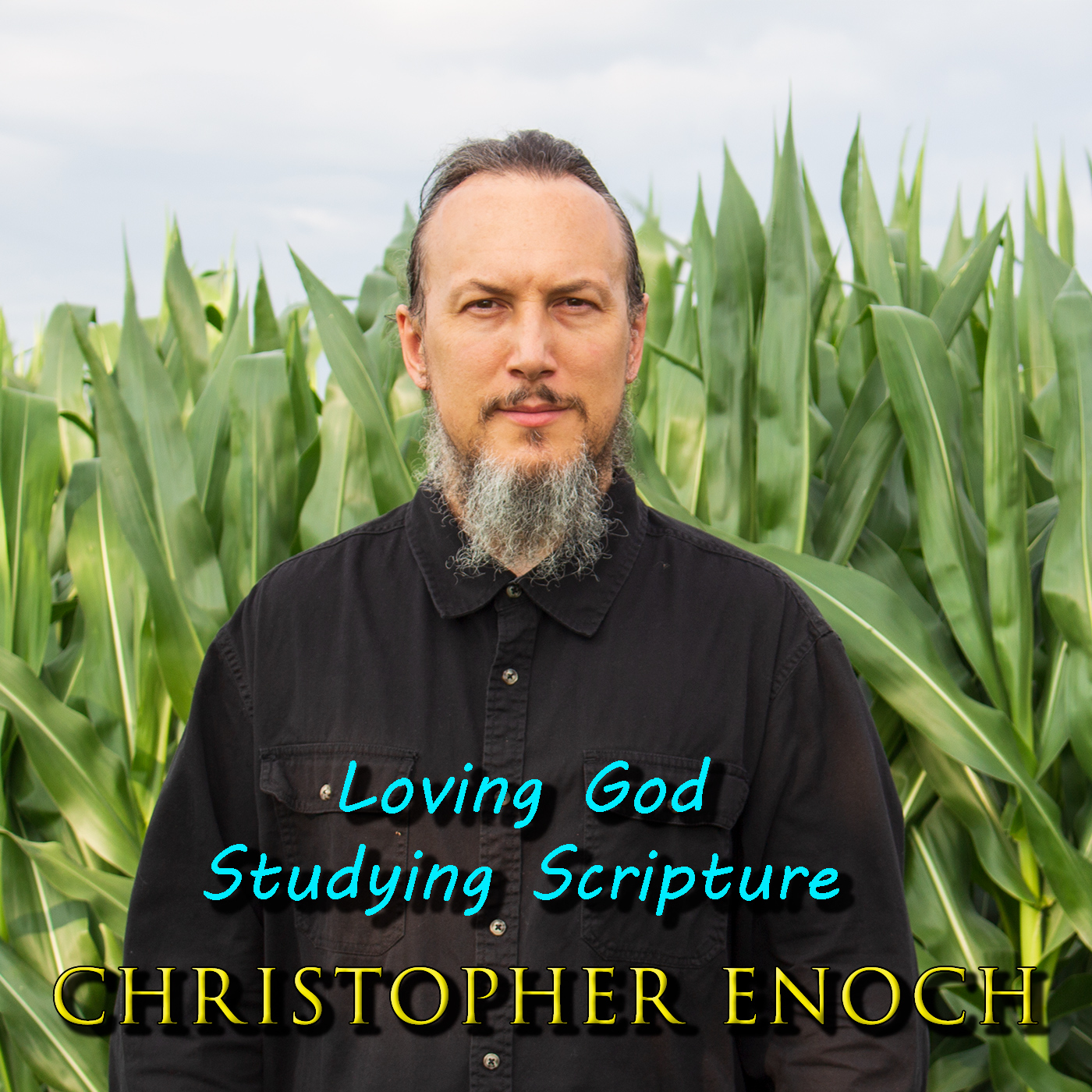
Loving God. Studying Scripture.
Episodes

Sep 27, 2026
Sep 27, 2026
1 hr 4 min
In this live study, Christopher Enoch examines the striking differences between the Beatitudes in Matthew 5 and Luke 6. Did Matthew spiritualize Jesus' words into 'poor in spirit,' or did Luke remove spiritual language to focus on literal poverty? We explore the Old Testament background in Psalm 37, the Sermon on the Mount versus the Sermon on the Plain, and how Second Temple Jewish literary traditions shaped the Gospels. Plus, Christopher responds to a viewer question debunking the claim that the Dead Sea Scrolls were modern plants written on sheepskin, presenting forensic evidence from radiocarbon dating, ink analysis, and ancient animal DNA.
Chapters:
0:00 Introduction
0:57 Capernaum & The Prophecy of Isaiah
3:58 Setting the Scene: Mountain vs. Level Place
6:08 Matthew 5: Blessings and Promises
7:14 Echoes of Psalm 37 in the Beatitudes
9:14 Peacemaking, Persecution, and Righteousness
13:20 Comparing Matthew and Luke Side-by-Side
14:51 "Poor in Spirit" vs. "You Who Are Poor"
17:35 The Four Blessings & Four Woes in Luke
18:56 Source Theories: Q Source and Literary Dependence
21:01 Textual Analysis: Evidence vs. Assumptions
32:18 The Harmonization Problem in the Gospels
37:33 Receiving the Comfort and the Challenge
39:56 Community Prayer & Intercession
51:59 The Dead Sea Scrolls: Planted or Authentic?
54:49 Radiocarbon & Ink Analysis of Qumran Texts
56:52 Ancient Animal DNA Debunks the Sheepskin Myth

Sep 26, 2026
Sep 26, 2026
2 hr 33 sec
Join Christopher Enoch for an in-depth verse-by-verse examination of Matthew 4 and the temptation of Jesus in the wilderness. In this session, Enoch explores the synoptic problem, comparing Mark's two-verse account with Matthew and Luke, examining the hypothetical Q source, and explaining why Jesus exclusively quoted from Deuteronomy to counter Satan. Later in the broadcast, Christopher responds to an in-depth viewer comment regarding the historical division between the Old and New Testaments, uncovering how ancient synagogues maintained scroll libraries, Marcion's role in establishing early canons, why the Book of Acts never quotes the New Testament, and why rigid canon boundaries and Sola Scriptura collapse under manuscript evidence.
Chapters:
0:00 Introduction
2:47 The First Temptation & Bread from Stones
4:28 Satan Quotes Psalm 91 at the Temple
6:40 The High Mountain & The Roots of Sin
10:11 Comparing Matthew's Account With Mark
12:49 Markan Priority & The Hypothetical Q Source
14:51 Why Jesus Only Quoted Deuteronomy
20:03 Parallels Between Jesus & Israel's 40 Years
26:43 Why Matthew & Luke Present Different Orders
30:24 Did Jesus See Every Kingdom From One Mountain?
38:37 Livestream Quiz: Order Variations in the Gospels
49:29 Who Really Wrote the Gospel of Mark?
57:09 Old Testament vs New Testament: Viewer Question
1:01:04 What Did Scripture Look Like in the First Century?
1:07:23 What the Word "Scripture" Meant to Biblical Authors
1:11:06 Why the Book of Acts Never Quotes the New Testament
1:17:53 Psalm 119 & The Eternal Nature of God's Word
1:23:05 What Jesus Meant by "Fulfill the Law" in Matthew 5
1:25:56 Marcion & The Origin of the New Testament Canon
1:28:20 Searching for "Love Endures Forever" in Scripture
1:31:34 Why Biblical Canon Is a Human Construct
1:35:11 Reading the Apocrypha Without Church Dogma
1:39:28 Why Sola Scriptura Is a Self-Defeating Doctrine
1:41:28 Manuscript Variants & Scribes Handling Letters
1:59:01 Paul's Letters as Historical Correspondence

Sep 25, 2026
Sep 25, 2026
40 min
Christopher Enoch shares rare archival footage of his open-air street outreach in downtown Hamilton from October 1994, reflecting on 32 years of personal and theological growth. He then answers viewer questions addressing Second Esdras, the logical trap of the personal incredulity fallacy in scripture study, and why trusting your heart over objective truth leads to spiritual deception.
Chapters:
0:00 Introduction
3:17 Setting Up Downtown Outreach & Sound Equipment
10:53 1994 Street Sermon: The Gospel of Jesus Christ
15:44 The Agony of Gethsemane & The Great Exchange
20:14 What Repentance & True Salvation Look Like
24:08 Street Altar Call & Sinner's Prayer
30:11 Reflecting on 32 Years of Ministry Growth
33:44 Second Esdras & The Personal Incredulity Fallacy
36:15 Why "Follow Your Heart" Deceives Believers
39:03 Jeremiah 17:9: The Deceitful Heart vs The Spirit of God

Sep 24, 2026
Sep 24, 2026
1 hr 31 min
In this livestream, Christopher Enoch digs deep into Matthew 2:23 to investigate the prophecy that Jesus would be called a Nazarene—a quotation found nowhere in the Hebrew Bible. He examines the archaeological evidence for 1st-century Nazareth, compares gospel differences in the baptism of Jesus and Josephus' historical record, and addresses a viral claim concerning the Noahide Conference, Beit Din courts, and modern conspiracy theories about outlawing Christianity.
Chapters:
0:00 Introduction
3:44 Evaluating the 3 Explanations: Netzer, Nazarite, and Rejection
11:55 Did Ancient Nazareth Actually Exist? Archaeology vs. Silence
17:10 John the Baptist in Josephus vs. the Gospels
22:18 Comparing the Baptism Accounts: Mark, Matthew, and Luke
29:39 The Voice From Heaven and the Psalm 2 Variant in Codex Bezae
35:14 Critical Thinking: Herod's Slaughter of the Innocents in History
54:15 Understanding Matthew's Literary Style and Audience
1:00:11 Addressing the Noahide Conference Conspiracy Claim
1:08:09 Maimonides, Classical Jewish Law, and Idolatry
1:17:25 Public Law 102-14 and the Legal Reality
1:23:54 Who Was the First Jew? Why Righteous Gentiles Are Called Noahides

Sep 23, 2026
Sep 23, 2026
1 hr 31 min
Join Christopher Enoch for a deep dive into the Feast of Trumpets (Yom Teruah) and Rosh Hashanah. In this livestream study, we examine the Hebrew text of Leviticus 23, the signaling laws in Numbers 10, the Temple Mount 'Place of Trumpeting' stone inscription, the 364-day calendar in the Dead Sea Scrolls, and why modern prophecy claims about 'no man knows the day or hour' lack ancient evidence. Plus, Christopher Enoch addresses viewer questions regarding discrepancies between the disciples' names across the four Gospels.
Chapters:
0:00 The Silent Shofar Rule on Shabbat
0:56 What Leviticus Actually Says About Yom Teruah
5:24 Teruah vs Trumpet: What the Hebrew Means
9:05 Numbers 10: Silver Trumpets & Signaling
16:45 Shofar vs Metal Trumpet in the Old Testament
20:05 The Shofar in Leviticus 25 (Jubilee)
24:45 The Place of Trumpeting Stone at the Temple Mount
28:39 Why Is the New Year in the Seventh Month?
31:09 The Four New Years in the Mishnah
35:22 The 364-Day Calendar in Jubilees and Qumran
40:32 The War Scroll and Apocalyptic Battle Trumpets
44:34 Nehemiah 8: Reading the Law at the Water Gate
48:54 New Testament Trumpet Imagery
50:57 Debunking the 'No Man Knows the Day or Hour' Myth
55:32 Interactive Quiz & Scriptural Analysis
1:10:39 Do the Gospels Contradict on Disciples' Names?
1:15:51 Thaddeus vs Judas of James
1:23:50 Simon and Peter: Did Jesus Change His Name?

Sep 22, 2026
Sep 22, 2026
1 hr 46 min
In this extensive livestream study, Christopher Enoch investigates two hotly debated topics in biblical scholarship and faith communities: the pronunciation of the four-letter Divine Name (Tetragrammaton) and whether the Feast of Trumpets (Yom Teruah) is a predictive prophecy of the future return of Christ.
Examining ancient Hebrew grammar, the Black Obelisk of Shalmaneser III (841 BC), the Elephantine Papyri, Dead Sea Scroll 4Q120, Josephus, and the Patristic Greek witnesses, Christopher tests popular sacred name claims against hard artifactual evidence. Then, he explores the origins of dispensational feast charts (tracing John Nelson Darby, the Scofield Bible, and Zola Levitt) to evaluate whether Leviticus 23 and Matthew 24 support a chronological rapture schedule or an ancient memorial.
Chapters:
0:00 Introduction
6:17 The Tetragrammaton and Ancient Hebrew Vowels
8:41 Exodus 3:14 and Translation Choices
11:37 The Judah Subtraction Argument Debunked
16:41 Short Forms: Yah and Yahu in Biblical Names
19:22 Does Final Hey Mean Ah? The Moses Counterexample
21:06 The Black Obelisk of Shalmaneser III (841 BC)
23:27 Josephus on the High Priest's Golden Crown
28:12 Greek Witnesses: Dead Sea Scroll 4Q120 & Clement
31:43 Samaritan Pronunciations and Theodoret
38:29 Interactive Quiz: Earliest Vowel Evidence
1:08:20 Introduction to Yom Teruah (Feast of Trumpets)
1:15:05 The Origin of the Prophetic Feast Calendar
1:17:01 What Leviticus 23 Actually Says
1:22:58 Darby, Scofield, and Zola Levitt (1830-1979)
1:25:39 Colossians 2 and Hebrews on Shadows
1:28:33 Do New Testament Trumpet Verses Name the Feast?
1:31:52 Matthew 24 and the 70 AD Temple Destruction
1:39:05 Conclusion: Scripture vs Human Tradition
1:41:08 Interactive Quiz: Leviticus 23 Analysis

Sep 21, 2026
Sep 21, 2026
59 min
Join Christopher Enoch for an in-depth verse-by-verse historical examination of Matthew chapter 2. In this broadcast, we examine who the Magi actually were, why their practice of astrology contradicts Torah prohibitions, the astronomical reality of the Star of Bethlehem, what the Roman-Jewish historian Flavius Josephus reveals about King Herod, and how early Christian writers interpreted prophetic passages in Hosea and Jeremiah.
Chapters:
0:00 The Magi: Astrologers of the Ancient World
2:15 Torah Forbids Divination: Matthew's Contrast
4:01 The Myth of the Three Kings
4:55 The Behavior of the Star of Bethlehem
9:09 Herod in the Historical Record of Josephus
12:42 The Massacre of the Innocents: Evidence vs Silence
16:05 Moses and Pharaoh: The Literary Pattern
18:59 Hosea 11:1: "Out of Egypt I Called My Son"
21:16 Jeremiah 31: Rachel Weeping for Her Children
23:25 Four Conclusions on Matthew's Nativity
32:08 Reasoning Through Historical Silence
39:03 Evaluating the Historical Arguments
51:02 Why Mark Has No Virgin Birth
58:12 Genesis 6: Sons of God in Ancient Literature

Sep 20, 2026
Sep 20, 2026
1 hr 44 min
Did the prophet Isaiah predict a virgin birth 700 years before Jesus, or has church tradition misunderstood the Hebrew text? In this comprehensive study, Christopher Enoch examines the historical setting of Isaiah 7, the Greek Septuagint translation, Matthew's use of Hebrew scriptures, and ancient manuscript discoveries including the Sinaitic Syriac palimpsest. Explore the evidence of Hebrew vocabulary ('almah' vs 'betulah'), New Testament genealogy discrepancies, and what early Christian writers actually recorded about the nativity.
Chapters:
0:00 The 700-Year Prophecy Problem
4:05 Genealogies and Omitted Generations
9:51 The Extra Ancestor in Luke's Lineage
17:18 The 8th Century Crisis of King Ahaz
20:43 Reading Isaiah 7 in Context
23:43 The Sign of Immanuel and the Two Kings
34:38 Isaiah 8 and the Prophet's Children as Signs
42:30 The Hebrew Word 'Almah' vs 'Betulah'
52:06 The Septuagint and the Greek Word 'Parthenos'
58:57 Matthew's Account of the Nativity
1:13:25 The Meaning and Use of Immanuel
1:21:58 What Mark, John, and Paul Say
1:26:37 The Sinaitic Syriac Manuscript Discovery
1:32:30 What the Ancient Evidence Actually Proves
1:35:02 Audience Study Question and Analysis

Sep 19, 2026
Sep 19, 2026
1 hr 32 min
Christopher Enoch conducts an exhaustive study comparing the genealogy of Jesus in Matthew 1 with 1 Chronicles 3 and Luke 3. From omitted kings and missing generations to Shealtiel's two fathers and the popular Mary genealogy theory, this episode puts every traditional harmonization to the textual test.
Chapters:
0:00 Matthew's 14-14-14 Structure & Counting
3:41 The Missing 14th Generation in Group Three
8:25 Names vs Positions in Ancient Lists
11:28 The 41 Names Dilemma Explained
18:47 Matthew 1 vs 1 Chronicles 3 Parallel Check
21:18 The Three Omitted Kings of Judah
25:33 Testing the Wicked Kings Explanation
31:37 King Manasseh and the Omission Theory
34:03 Zerubbabel's Line in Chronicles vs Ezra
37:58 The Four Women Named Before Mary
41:10 The Mystery of Rahab as Boaz's Mother
46:51 Matthew vs Luke: Two Fathers for Joseph
50:20 Solomon's Line vs Nathan's Line
54:09 Shealtiel & Zerubbabel in Both Lists
58:06 Did Luke Actually Trace Mary's Line?
1:05:04 Julius Africanus & Levirate Marriage Solution
1:08:39 The Curse of Jeconiah in Jeremiah 22
1:11:13 The Complete Textual Ledger of Data
1:18:59 Canon Assumptions & Why We Harmonize
1:21:35 Audience Quiz: The Strongest Objection
1:28:24 Generational Compression in Ancient Hebrew

Sep 18, 2026
Sep 18, 2026
2 hr 19 min
How did the author of the Gospel of Matthew cite Hebrew scripture, and why do his quotations consistently diverge from the Old Testament texts we possess today?
In this livestream study, Christopher Enoch examines Matthew's famous fulfillment formulas, comparing the Greek and Hebrew texts of Micah 5:2 and Zechariah 11. Learn why Matthew 27:9 mistakenly credits Jeremiah with the thirty pieces of silver, what ancient Greek manuscripts in the Nestle-Aland apparatus reveal about scribal alterations, and how Second Temple documents like the Dead Sea Scrolls (Habakkuk Pesher) unlock first-century hermeneutics. Finally, Christopher addresses viewer pushback regarding the Gospel of Mark's complete silence on the virgin birth narrative and traces the 50-year textual gap across the earliest New Testament writings.
Chapters:
0:00 Introduction
5:49 The 10 Fulfillment Formulas in Matthew
17:13 Which Text Was Matthew Quoting?
22:12 Three Scholarly Theories on Matthew's Sources
28:30 Four Conspicuous Differences in Micah 5:2
41:02 The Matthew 27:9 Silver Prophecy Mystery
43:59 Zechariah 11 vs Jeremiah Attribution
47:17 Understanding Canon Bias & Human Origins
52:33 Manuscript Evidence in the Nestle-Aland Greek
59:02 What Does "Fulfill" (Pleroo) Actually Mean?
1:05:44 The Dead Sea Scrolls Habakkuk Commentary
1:10:12 How Scripture Was Cited in the Ancient World
1:17:08 Full Breakdown of Matthean Quotation Data
1:24:36 Live Interactive Exegesis Challenge
1:41:32 Why Is the Virgin Birth Missing in Mark and Paul?
1:52:35 The 50-Year Silence on the Nativity
2:13:02 Exclusively Matthew and Luke: The Evidence